Methods
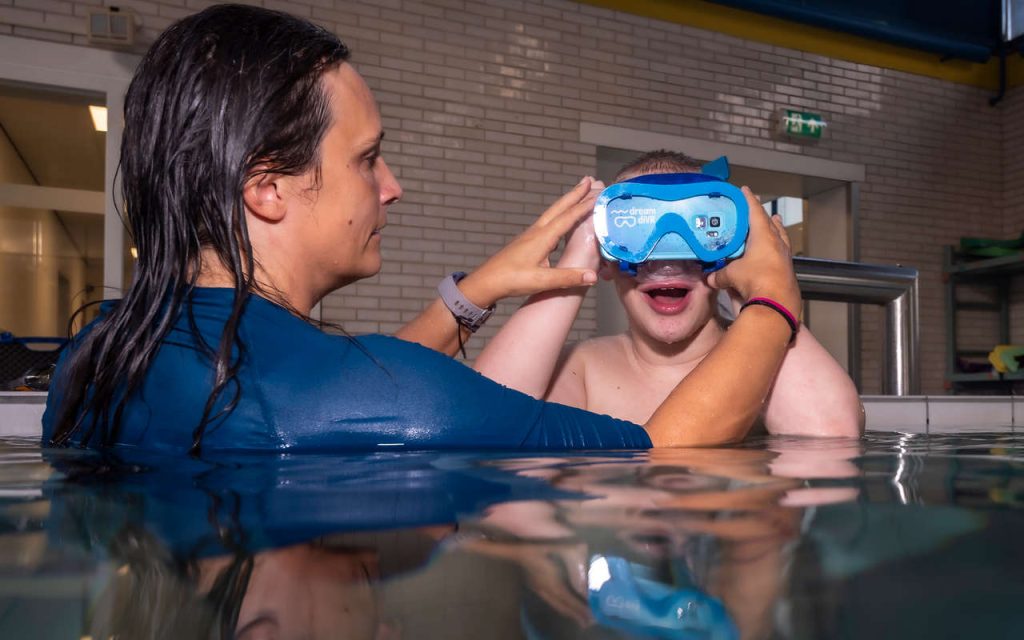
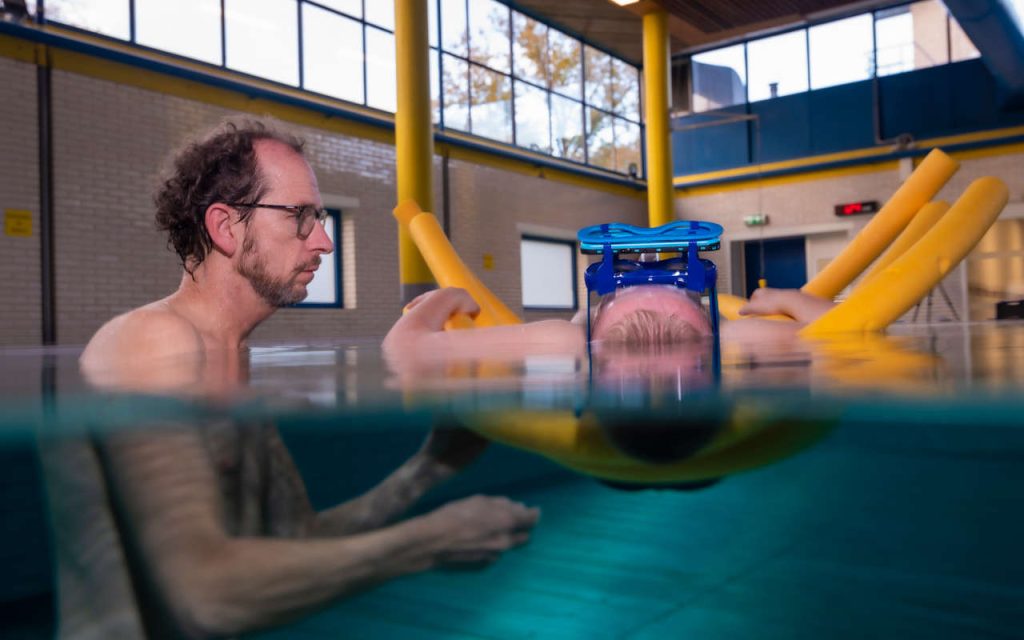
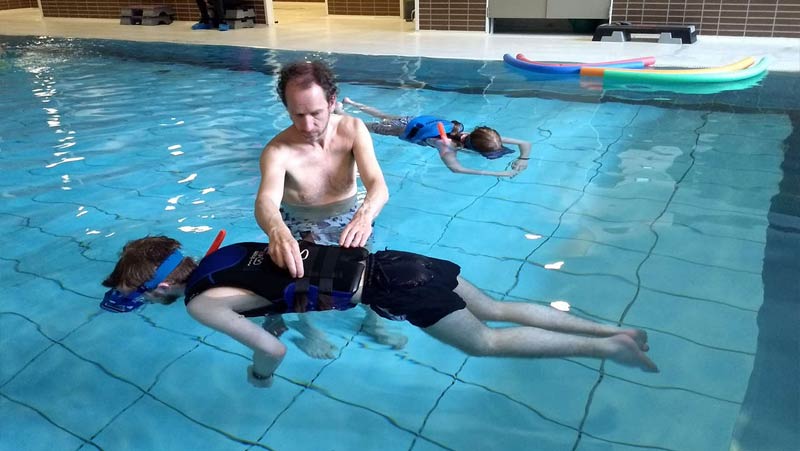
DreamDiVR is often used by therapists and exercise educators who want to make exercise in water more effective and experiential for the people they supervise.
Deployment is possible in several ways:
- By offering a program of targeted exercises tailored to the user and focused on the goals to be achieved
- By leaving the user free to use the goggles, and thus through the experience to move more and/or longer
- Through the distraction of VR, help the user imperceptibly cross physical and mental limits, and thus work more effectively on rehabilitation, for example
- By making the distraction of VR regularly recurring exercises of the user less repetitive, and thus better/sustainable over longer periods of time.
'This way we want to make our clients' lives more beautiful and enjoyable.'
Michael de Ridder, DreamDiVR
'With the VR goggles, we offer educational and therapeutic programs that contribute to people's quality of life, both physically and mentally.
These are unique experiences for people with (multiple) disabilities who have little travel experience but a lot of development potential. Under guidance, they experience new worlds while working unnoticed on therapeutic goals. And so DreamDiVR is not only fun, but also a healthcare product for better health, increased vitality and stress reduction.
The experience has positive effects on the user's physical and mental well-being. The VR diving goggles offer relaxation and challenge people with physical and/or mental disabilities to move more. Moreover, from the wonder, amazement and calming effects, you can really connect.
Not only the image excites, but multiple senses are activated. For example, with special audio tracks, and of course with the warmth of the water and the pressure on the skin. This all contributes to the overall experience. Digital and analog stimuli combined, that's what makes it so strong.'
Quote from Onderwatersport, Dominique van Dam
Swimming with DreamDIVR is healthy and fun
Lane swimming is not equally challenging for everyone. With the VR diving goggles, people see beautiful underwater movies and 3D animations. With these, we challenge people to exercise more playfully. Swimming is very healthy. It promotes a strong heart, is good for muscles, tendons and joints and ensures a good night's sleep.
Despite all these care-related benefits, (dry) swimming with DreamDiVR is also just plain fun. Research shows that games contribute positively to personal development. Swimming with the VR diving goggles is extra relaxing, which has positive effects on physical, mental and social health.
The experiences are recreational, groundbreaking, experimental, fun and responsible. It goes step by step and always under expert guidance. On dry land, participants first touch the goggles, then put them on and then slowly enter the water. The feeling of weightlessness is very special and with the VR images, participants imagine themselves at the Great Barrier Reef, in a local pool.
Possibilities with DreamDiVR
DreamDiVR is particularly suitable for people with intellectual and/or physical disabilities, young or old. We have two variants:

1. Wet variant
For the wet version, we have the waterproof VR glasses, for use in a (therapeutic) swimming pool. In the water you get closer to the experience of the VR environment. Participants experience the difference between dry and wet, hot and cold, above and below water. And: the silence in your ears when you are underwater.
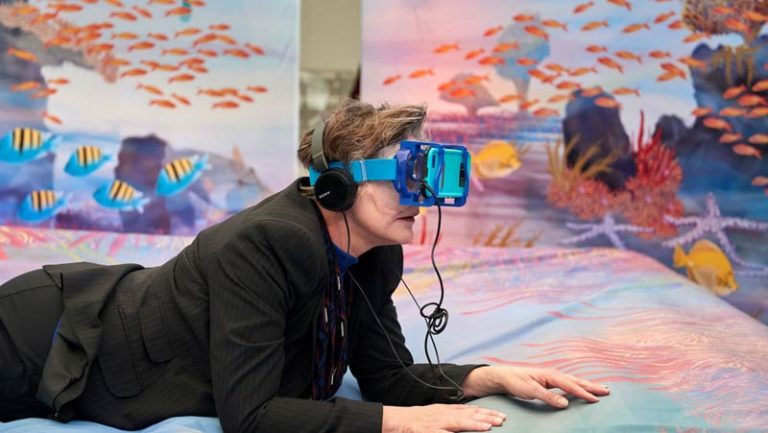
2. Dry variant
The dry variant consists of a large air cushion in an underwater setting. This variant is possible at almost any location and thus accessible to those who are bound to home or institution. This variant is also very suitable for people with a fear of water, as a first step to water freedom. You miss the feeling of water here, but it is a complete experience, both visually and with audio. We have been specialists in this field for years.
Guided therapeutic (swimming) clinics
A clinic with DreamDiVR is always customized. Therapeutic (swimming) clinics are 1-on-1 or in a group of up to 5 participants. The number of participants depends on the target group and level. In total, a session takes about 2 hours, including preparation, half an hour of swimming and post-session discussion. Beforehand we hold an extensive intake so that it is clear to everyone what we are going to do.