
Target groups
Who is DreamDiVR suitable for?
DreamDiVR is widely applicable and especially suitable for:
- (clients of) health care institutions
- hospitals
- children with (multiple) disabilities and their parents
- diving associations for people with disabilities
- rehabilitation organizations
- adapted schools for children with physical disabilities
- specialized resorts
(like Bio Vakantieoord, a partner of DreamDIVR).
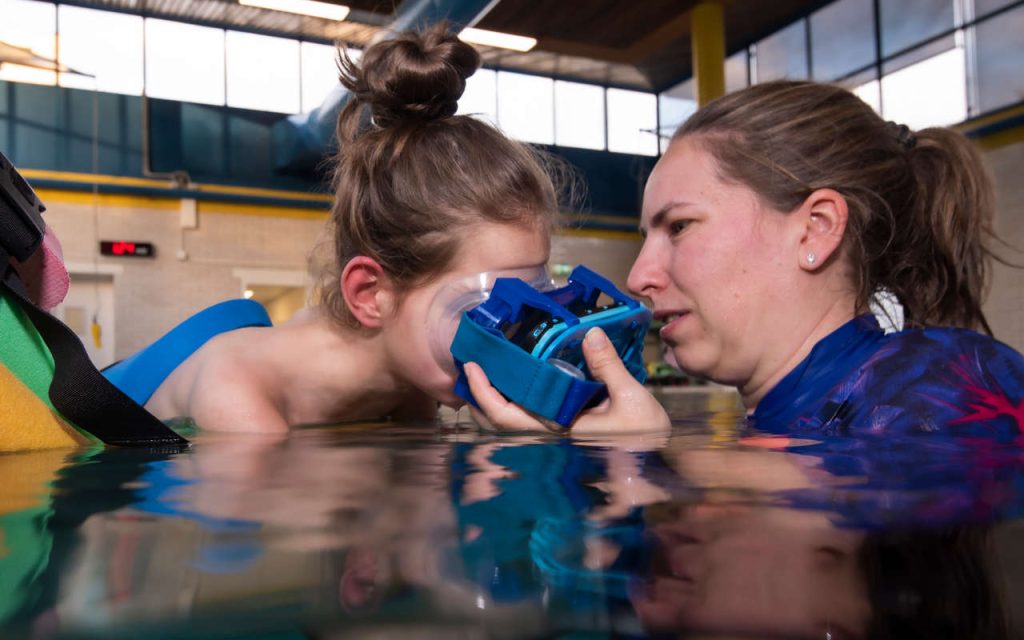
Our programs are carefully curated and made appropriate for every care need. They are both recreational with especially lots of FUN and experience, although a therapeutic session also emphasizes relaxation and connecting.
Quote from Onderwatersport magazine:
Experience
“This way we want to make our clients' lives more beautiful and fun,” says De Ridder. He is a therapist and practitioner himself.
He took the first steps to develop this VR experience from within his own organization. With De Ridder Zorg & Recreatie, he organizes thematic, creative care vacations and specialized vacation care (care services) for people with mental and physical disabilities. 'For example, we make mobile experience rooms, or we play with illusion by making a trail in the forest where we use glow-in-the-dark paint to give beautiful experiences to people for whom that is normally difficult to reach.'
Kansen
He sees opportunities for DreamDiVR in the pool environment for treatment in disability care, but also more broadly: "Elderly care, care in Parkinson's disease, I think it's broadly applicable. From care and development, you can come up with great things with a creative brain. For example, I also see possibilities in rehabilitation care or at burn centers. Also in special education, with students with developmental disabilities, using therapy can help. The activating power of VR is great, but the calming side is also very applicable. Until now, floating was simply floating, but with an image like that attached, it takes on a completely new dimension that can motivate people.'
What is very normal for divers - experiencing the underwater world, feeling and discovering it around them - has so far been unattainable for a very large part of this target group. 'And we can change that,' says De Ridder. 'With DreamDiVR's VR diving goggles, the underwater experience is accessible and affordable for everyone. Moreover, the effects for people with physical and/or mental disabilities are extremely positive. They move more, learn new skills and make real contact. The world under the water surface is a completely new experience, for young and old.'
Future
'Marketing the goggles is not that difficult in itself,' laughs De Ridder. 'But we really want more. For example, toward animations, a game with a reward system and a combination with reallife images.' The creative processing, all the post-processing of the images, is done by Filmwerk (formerly Rock en Rolstoel Producties), an organization where people with disabilities do film work, production and post-processing. 'My goal is to integrate this method of activation and tranquility into the day of those who can use it well. I believe in proper guidance, in handling these techniques properly and a teaching method that ensures that every therapist, counselor or caregiver knows how to use it. Above water good training is already very important, but in or under water it is completely invaluable.'
So one of the key processes De Ridder is now focusing on is, "Organizing the right care within the facilities that do exist. When people go swimming, we see if the goggles can be part of that. Furthermore, I try to transfer my experience and knowledge to special education and care. First the general core characteristics and basic steps need to be known. Then we should also be able to incorporate personal preferences.'
Quote from Onderwatersport, Dominique van Dam